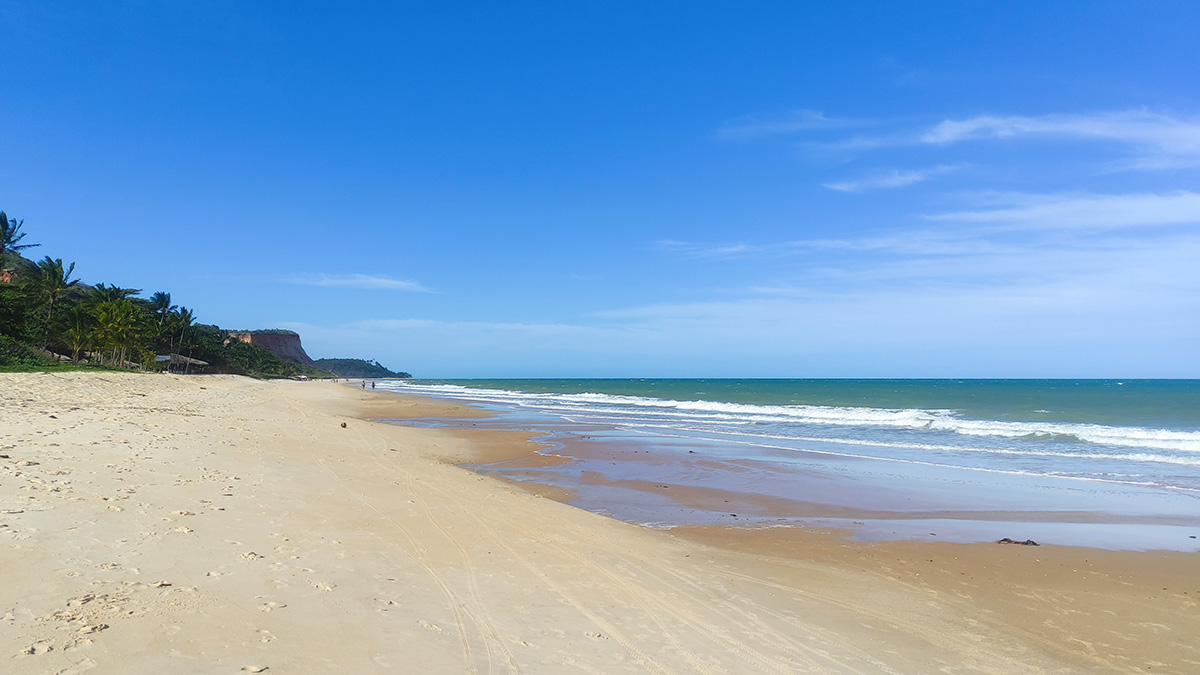
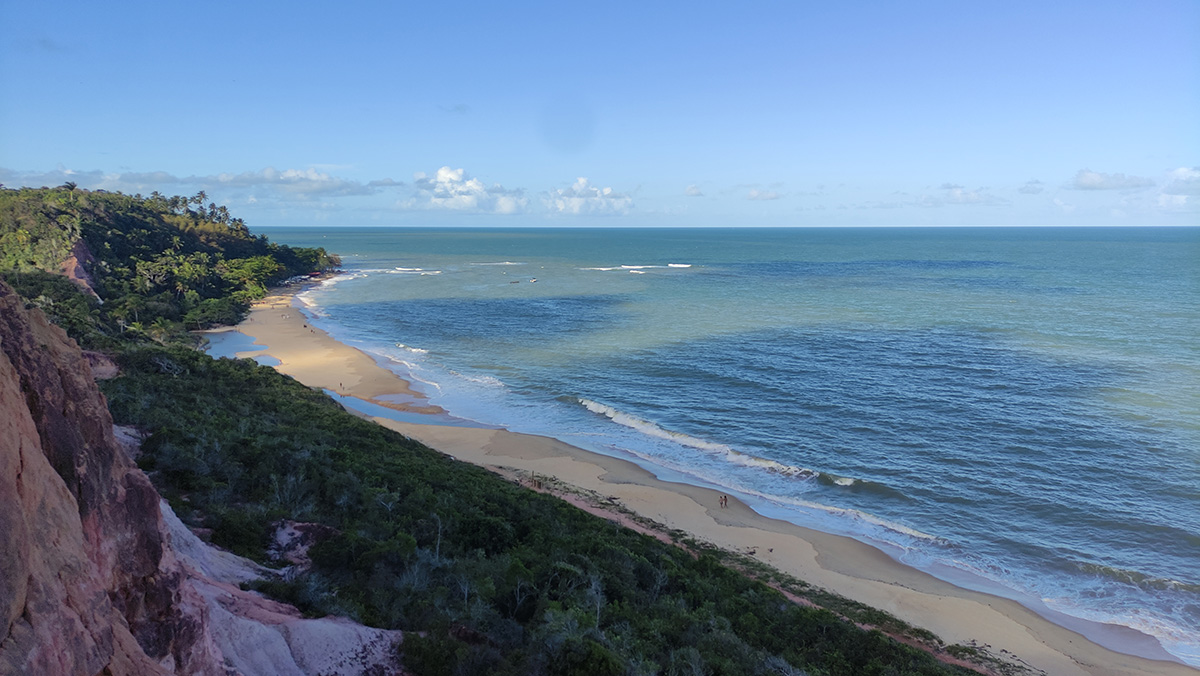
Safe harbour in English. And smile—you are in Bahia.
There are Brazilians—locals—who feel privileged to have lived in Porto Seguro.
Why?
Nearly five hundred and thirty years ago, a large fleet of Portuguese vessels appeared off the nearby coast. The fleet was led by the military commander and navigator Pedro Álvares Cabral.
Signs of human presence were detected along the shore, and a small boat was sent to establish first contact. Soon after, the fleet sailed farther north and anchored in what is today Porto Seguro.
They remained only a few days, concluding their stay by erecting a massive wooden cross a gesture whose significance may have extended beyond the religious.
The following day, one vessel was ordered to return to Portugal, while the rest of the fleet resumed its voyage toward India.
The land was named the Island of the True Cross. According to the Treaty of Tordesillas, it lay within territory allotted to Portugal.
Some three hundred years later, the second and last Emperor of Brazil, Dom Pedro II, became aware that the country’s deeply diverse population—Europeans, Indigenous peoples, descendants of Africans—shared no common origin they could point to.
The emperor sensed the need to unify the people into a single nation through something they might recognize as their own—a story, a beginning, something to return to, perhaps even something to be proud of.
The search for that beginning began. Yet even the most basic facts were missing. It was unclear how Cabral had died, or where. He was forgotten.
What surfaced instead was what had already been said. The newly encountered land was first believed to be an island, later suspected to be a part of a continent. Its discovery was described as accidental—the result of ocean currents and winds carrying the fleet far from the African coast.
The hunger for knowledge is sometimes so intense it will consume anything to satisfy itself. And when that hunger concerns a whole nation—its identity, its future…
Pedro Álvares Cabral emerged as a national hero. The discoverer of Brazil. The one who had found home for millions. Now there was something to celebrate, something to proclaim.
“Viva Cabral! Viva Brasil!”
Now they could belong.
But the search did not end there. Hunger rarely does. The more that was learned, the more questions surfaced. Until the most unsettling one was finally asked.
“Is this all true?”
The question was raised by the emperor himself—the same man who had offered the answer. The fact that he asked it at all suggests that he was not only a statesman, but something rarer—a human being willing to doubt what he had helped establish.
Could the discovery have been intentional?
Where evidence is absent, certainty dissolves. And once certainty dissolves, doubt spreads—quietly, persistently, like a virus.
Now they did not know more than they knew. And perhaps that is the only truth that remains to this day.
Who knows? If the earth could speak, we would have known so much more. But she does not concern herself with defending truth. Her only reality is to be.